
BassTame by lkjb
BassTame from the KVR Developer Challenge 2023 is purported to be a bass compressor, yet level-independent. The blurb about it says the energy of the bass signal is compared to the overall signal to determine the bass reduction. lkjb‘s ReFine and QRange plugins are oft used and much beloved, so I was intrigued to find out what this new one had to offer. I’ll break it down based upon my experience testing the plugin out.
~`~
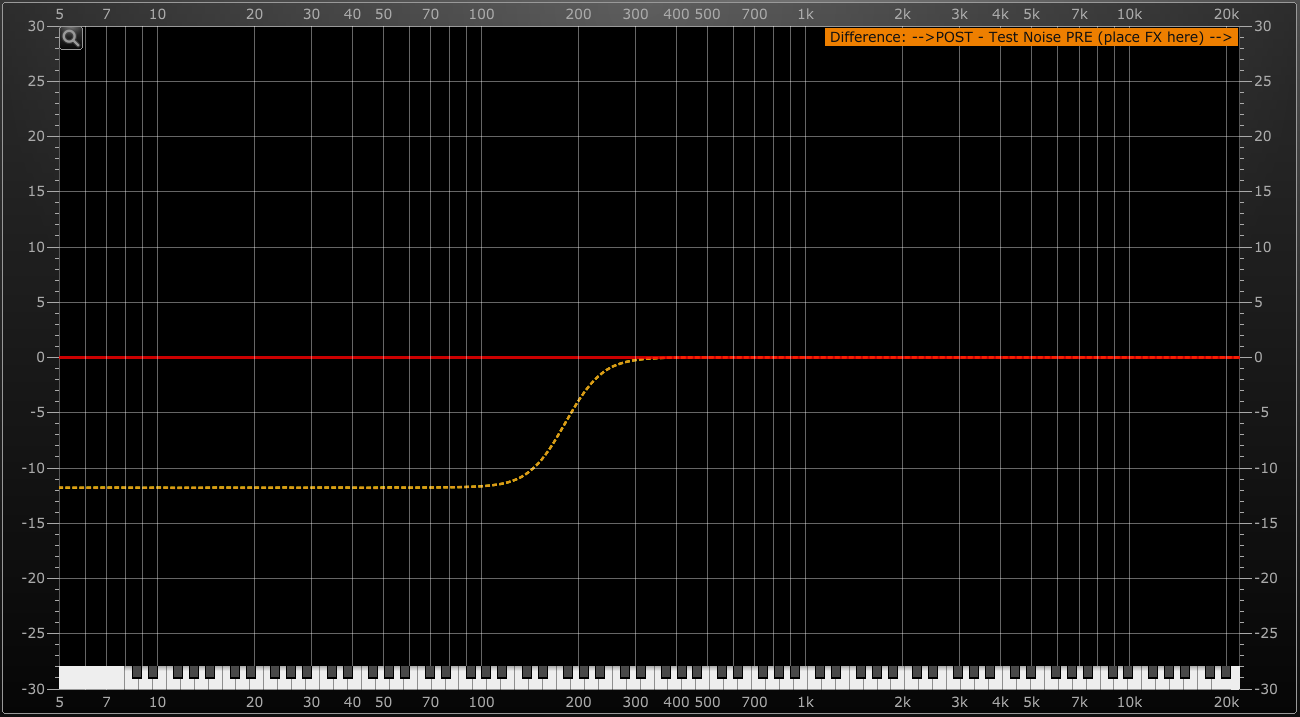
Practical Functionality: The effect functions as a dynamic low-shelf (reduction only). At maximum Amount, it reduces level below the selected Frequency by about 12dB. This is more than enough to really thin out the low end of material when doing so might be desired. Often on mix projects I’ll route all non-percussive elements into two main busses: “Non-Bass Instruments” and “Bass.” In these situations, placing BassTame on the “Non-Bass Instruments” buss to free up low end for the “Bass” Buss makes a lot of sense.
~`~

GR Display: You can see the amount of gain reduction happening in the Amount dial (red light coming down from the top). This is a groovy GUI strategy for plugins, since it adds useful visual feedback without adding any clutter, repurposing existing pixels in a clever manner.
~`~
Distortion… what!? I found that on certain material at certain settings (most emphatically when Amount is near the middle of its range and the higher Freq is), the ability to generate a tasty distortion on thumpy bass elements (e.g., kick drum). Cool! Is that because of aggressive timing settings under the hood? It’s neat and sound good, but might not be desired for certain things. It deceptively makes the bass seem more perceptual in a mix, for sure, which you would not expect from a bass reduction plugin.
Next: w/lkjb BassTame set to 50% Amount and a Frequency of 77Hz.
~`~
Level-Independent? Using the In~Out rack from the PerforModule Emphasizers pack, I tested out sending wildly different input levels to the processor. When adjusting the in/out gain in realtime, there is a moment of “catching up” after immediately changing the level, but then the amount of gain reduction evens out to what seems like the same average every time, despite the input level. This holds up the claim that BassTame‘s response is based on the relative amount of bass compared to the whole signal, as opposed to pure level alone. This reminds me very much of the High-Frequency Limiter module from TDR’s Limiter6, and is interesting and cool. It means that subsequent changes to processing prior-in-the-chain to BassTame are less likely to alter the end result unpredictably, as typical compressors are prone to. Do keep in mind, though, that quick bass level differences, moment-to-moment, will to a degree still affect the dynamic reactivity.
~`~
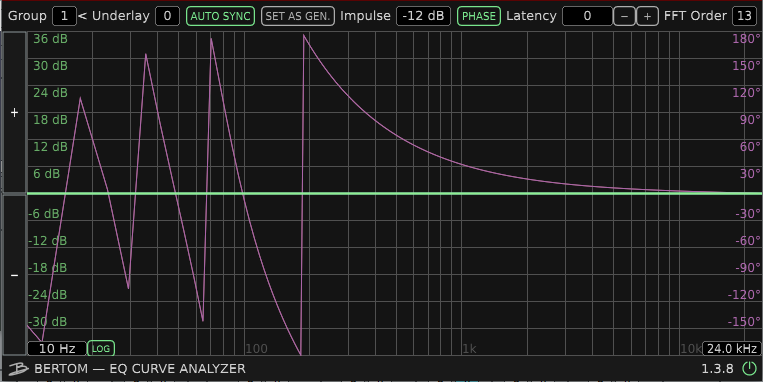
But is it compressing bass or not? No and yes. The plugin Zip by Unfiltered Audio is an example of a compressor that can do its thing based on different aspects of the input signal, which I find BassTame‘s reactive response sorta akin to — except that is full-range compression, while this is not. So is BassTame more like a Dyanmic EQ or like a Multiband Compressor? Using Bertom’s EQ Curve Analyzer I can see that the plugin is causing phase rotation in the lower frequencies, even with Amount at zero. So this is more like a Multiband Compressor than a dynamic EQ, with band-splitting built in. You’d expect one full 180 degree rotation for a single filter, but there are actually multiple phase rotations going on! So… this effect will not be good for using in parallel, and it will affect the timing of your low-end phase, similar to TDR Slick EQ GE‘s “Phi” option. This could be a good, bad, or imperceptible thing. Usually a shelf only causes a gradual phase shift, not a full rotation. Is it using multiple parallel highpass filters or something? Does this have something to do with the distortion? The mystery deepens!
~`~
Takeaway: I’m gonna use it. I have long been intrigued by and wished for more plugins that are specific to the bottom- and top-end ranges of the frequency spectrum. However… I’m certainly glad I did this testing, particularly by ear, instead of merely taking the description at face value. Knowing it’s not a parallel-friendly plugin is good information. And it was super helpful to realize the potential of that 808-style distortion going on. When I want to ensure a clean sound, I may want to avoid Amount ranges near the middle coupled with mid-to-high Freq ranges (or just avoid using this plugin). On the other hand, I could use BassTame as a subtle-to-moderate distortion generator for making midbass sound more obvious in a mix. Using it on a “Non-Bass Instrument Buss” as theorized above, a touch of distortion around the cutoff might be desirable. Or maybe on the “Bass” buss, to give it some fuzz. Will I remember these tips? The chances have increased now that I’ve written this.
More KVR Developer Challenge 2023 plugin reviews coming soon (maybe)!?
 PerforModule